Another year of reading is drawing to a close! According to Goodreads, I finished 65 books in 2024. Here are five of my favorites that I read over the past year, in no particular order:
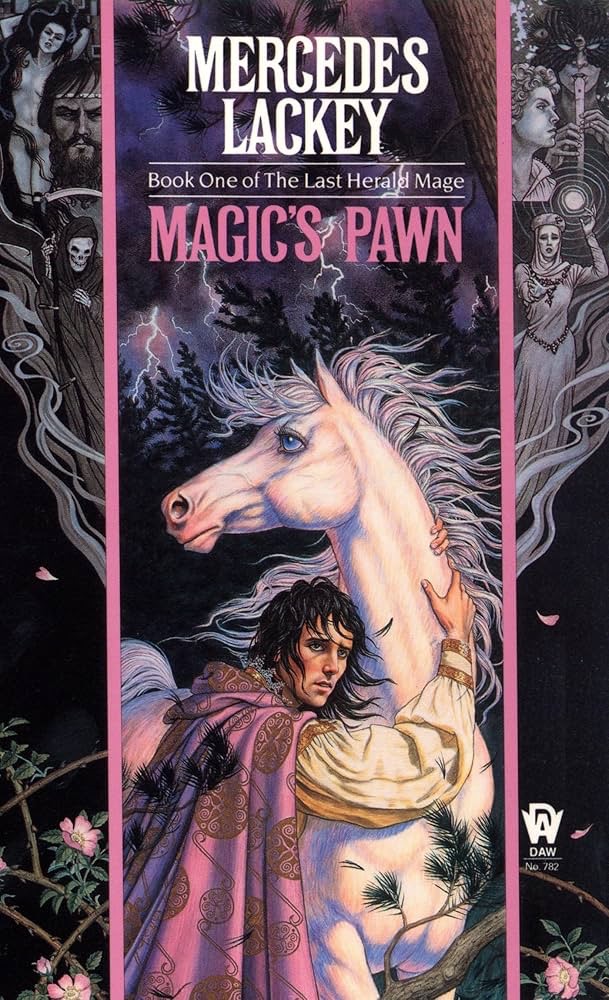
“This I think I have learned: where there is love, the form does not matter, and the gods are pleased. This I have observed: what occurs in nature, comes by the hand of nature, and if the gods did not approve, it would not be there. I give you these things as food for your heart and mind.”
Oh, how I wish I’d been introduced to this series when I was younger. Growing up, I would have cherished finding this kind of thoughtful representation in my favorite genre.
Magic’s Pawn, the first book in Mercedes Lackey’s The Last Herald-Mage Trilogy, was published in 1989—just two years after I was born—and this book provides the first example from a major publisher of a high fantasy novel featuring a gay protagonist. This is the kind of representation that I want to bring to the table with my own writing. It was a delight to read a book published nearly forty years ago that sets the example for LGBTQ+ fantasy characters that feel genuine, like the real, multidimensional humans that we are, clearly crafted with care and respect by Lackey’s adept hands.
I found Vanyel Askhevron’s story—and his love for Tylendel—deeply moving. He grabbed me by the heartstrings and never let go. So many of his experiences in the book are colored by his sexuality and his society’s views on it, but in many ways his struggles and triumphs—and certainly his teenage angst—are universal.
The book’s ending left me completely gutted; nonetheless, I’m still hungry to pick up the next book in the series. Luckily, Lackey is a famously prolific author, so there are plenty more books set in her captivating world of Valdemar; I can steadily devour her works for years to come and probably never finish them all.
While this list is not ranked, I have to say Magic’s Pawn was probably my single favorite book I read over the past year.
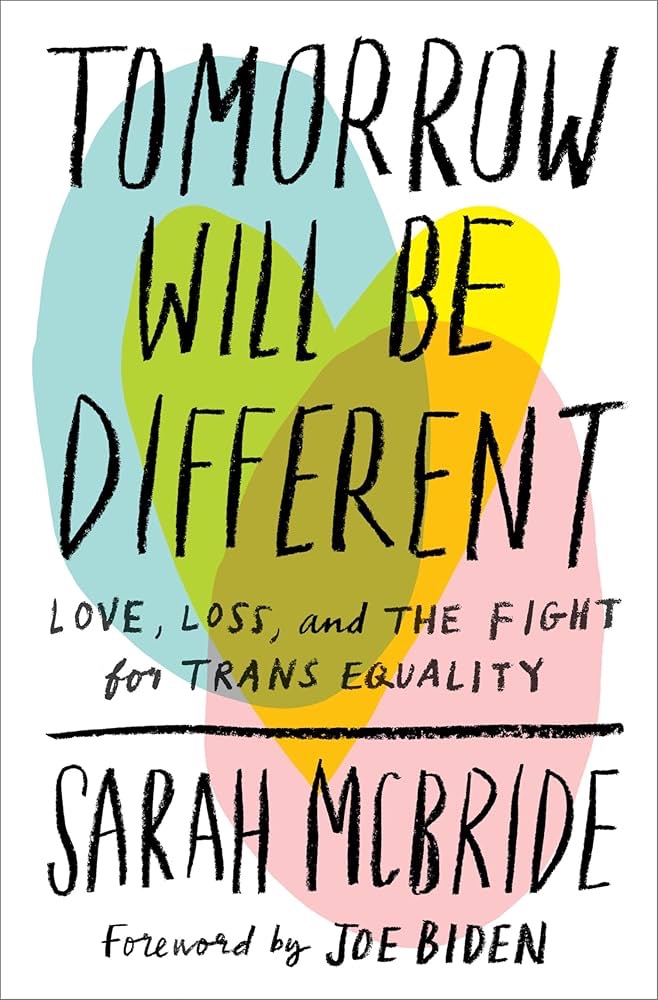
I know that it can feel like we’re almost lost as a country. But we must never forget that even with all of the hate and all of the challenges, no matter who is president, we can continue to change our world for the better.
Rep.-elect Sarah McBride is no stranger to blazing a trail.
During the Obama years, she was the first transgender intern at the White House. Then, after leading the successful efforts to pass protections for transgender people in Delaware, she ran for elected office in her home state, becoming the first openly trans state senator in the country. She earned a legislative record of accomplishments, including passing paid family and medical leave. This November, she was elected to the House of Representatives—come January, she will be sworn in as the first transgender member of Congress in our nation’s history.
Of course, right-wing bigots are already harassing her, but she has stated unequivocally that she did not run for Congress to wage culture wars—she ran to help people. And that has been her focus for a long time.
Tomorrow Will Be Different: Love, Loss, and the Fight for Trans Equality tells Sarah’s story, from her early days as a child who was already interested in politics, to finding the love of her life before tragically losing him, and finally to the career that led to her rise in Delaware politics. (She ran for state senate—and won—two years after this book was originally published in 2018.)
Sarah’s story is devastating at times, but I believe her perspective and experiences are important to read and learn from—especially as we face the daunting prospect of a second Trump administration on the heels of a hate-fueled presidential campaign that openly demonized trans people.
McBride’s memoir is a potent reminder that the issues that impact the transgender community impact every one of us. Everyone deserves the opportunity to embrace themselves for who they are and be treated with dignity, respect, and equality under the law. To move forward as a country, we cannot let hatred and ignorance reign supreme. We can’t cast people aside for who they are. We must lead with love and kindness, continue to fight for the future we all deserve, and find our comfort in the hope that, as McBride writes, tomorrow can—and will—be different.
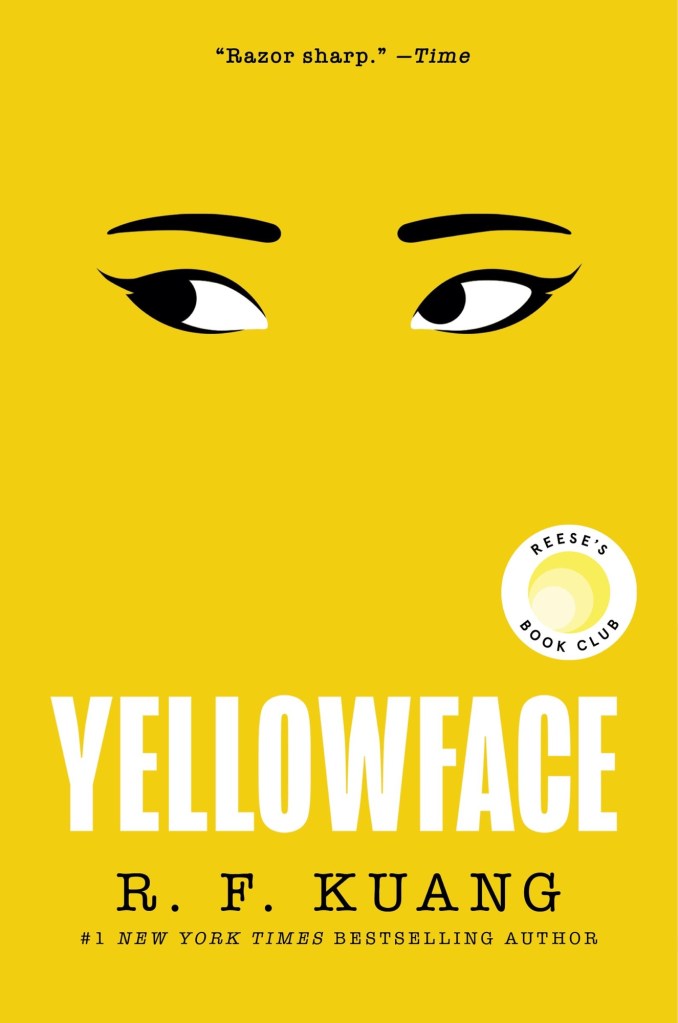
Writing is the closest thing we have to real magic. Writing is creating something out of nothing, is opening doors to other lands. Writing gives you power to shape your own world when the real one hurts too much.
I honestly could not put this book down. And whenever I was not actively reading it, there is a solid chance I was still thinking about it.
In Yellowface, a delicious dark satire about a slowly unfolding scandal, R.F. Kuang flexes her finely-tuned authorial skills and creates complex characters that I simply loved to hate. The premise—a white woman struggling to break through as a novelist who plagiarizes her dead friend and appropriates an Asian American identity in an attempt to boost her book sales—is fascinating on its face, but is enriched even more by Kuang’s expert execution and deft exploration of timely themes, including racism, misogyny, the toxicity of social media, and bias and incompetence in the publishing industry.
As the highly unlikable narrator—June Hayward, also known as Juniper Song—spiraled further and further into a literal nightmare of her own making, I found myself unable to avert my eyes from the impending train wreck. The book is written in first person from June’s perspective, forcing the reader to reckon with her justification for her actions throughout the course of the story, rather than automatically dismissing her as a racist plagiarist ripe for her comeuppance.
I won’t give too much away about how the plot thickens, but if anything about this synopsis is enticing, I’d recommend picking this book up and finding out for yourself.
Since I can only assume that all of Kuang’s works are as compulsively readable as Yellowface, her celebrated fantasy novels Babel and The Poppy War are high on my list for 2025. It’ll be a treat to read this gifted author in my favorite genre.

Almost everyone I talk to tells me about people they have lost “down the rabbit hole”—parents, siblings, best friends, as well as formerly trusted intellectuals and commentators. People, once familiar, who have become unrecognizable. Altered.
Imagine that you are a public figure, a writer, and a political activist whose books and articles were considered standards among academics and progressives. You’ve dedicated your career to opposing predatory capitalism, fascism and corporate globalization. Now, imagine that someone with a similar name and look as you in a parallel career is peddling dangerous conspiracy theories and reactionary right-wing politics. Worst of all, people are starting to mistake your doppelgänger for you.
Yeah, Naomi Klein’s Doppelganger: A Trip into the Mirror World was kind of a mind fuck. I mean that as a compliment, of course.
If you haven’t read Klein’s other works, I recommend checking out The Shock Doctrine: The Rise of Disaster Capitalism and This Changes Everything: Capitalism vs. The Climate. In my view, Klein is one of the most important voices in leftist politics—that’s what makes her apparent confusion with Naomi Wolf by the general public perplexing and infuriating. Wolf rose to prominence as a third wave feminist author and political advisor in the 1990s, but in recent years she has become increasingly unhinged, promoting conspiracies about a host of topics, including the COVID-19 pandemic and the safety and efficacy of the vaccine.
In Doppelganger, Klein examines her own feelings about the case of mistaken identity with someone who holds such a dissimilar worldview from her own. She uses the situation to explore political polarization and the rise of conspiracy theories in the modern political era, observing that fascism could be society’s collective doppelganger, the monster lurking inside all of us.
This book is required reading for anyone curious about the factors that led us back to the brink of fascism and the solidarity required to stop from going over the edge.
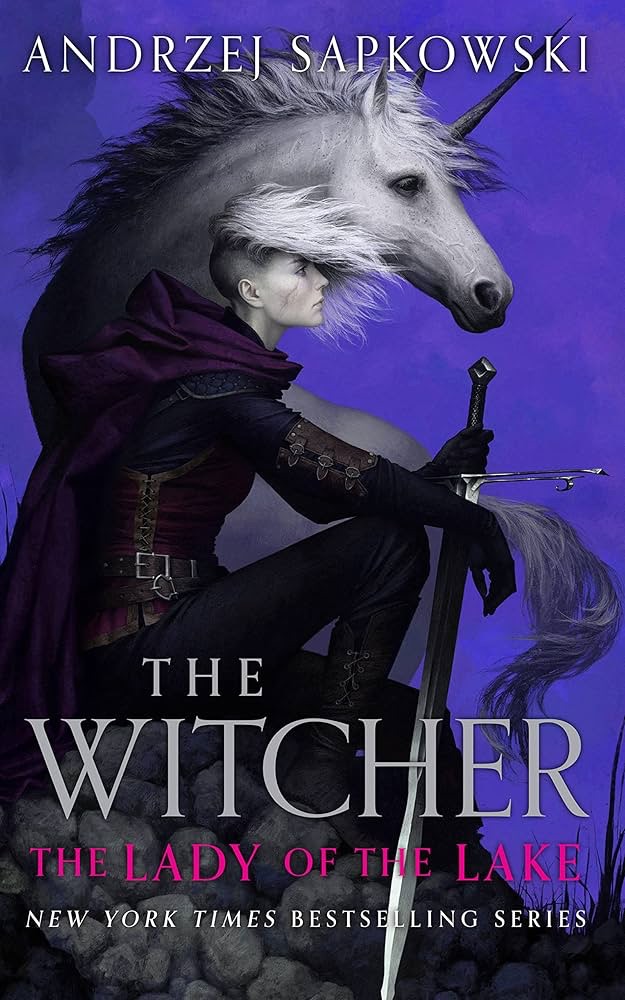
Eternity is hidden in every moment. Every departure is at once a return, every farewell is a greeting, every return is a parting. Everything is simultaneously a beginning and an end.
The Witcher books have sunk their claws into me and taken hold—and after reading the conclusion to Ciri’s story, I can easily say that this has become one of my favorite series of the modern era of fantasy.
Does it help that I have likely spent more hours playing The Witcher 3: Wild Hunt than any other game in my PlayStation library? I already had the chance to fall in love with Geralt, Dandelion, Yennefer, and Ciri years before I read English editions of Andrzej Sapkowski’s Witcher books, translated from the original Polish and published starting in 2007.
The Lady of the Lake, which debuted in English back in 2017, brings the epic tale to a close with an unforgettable journey. Sapkowski skillfully weaves his dark fantasy world with the mythos of Arthurian legend.
Considering that this is the final book in Ciri’s arc and many readers are still catching up on this series, I hesitate to reveal too much about the ending, so I’ll just say this: I can appreciate why some reviewers found it disappointing, but to me, it was a satisfying resolution to the story. Sapkowski leaves some important details obscured, allowing readers to draw their own conclusions.
As for Ciri, her story doesn’t have to end here. While they may not be part of the official canon of the books, the Witcher games provide a continuation for her character. (In fact, The Witcher 4, the upcoming title announced at this year’s Game Awards, will center Ciri as the playable protagonist.)
As dark and dangerous as it is, I can’t get enough of the world of the Witcher, which is why I’m delighted that I still have two more Witcher books to read, including the Geralt-focused short story collection Season of Storms and the forthcoming novel about a young Geralt of Rivia just setting out on the witcher’s path.
If you’ve been sleeping on what has quickly become a modern classic fantasy series, especially if you’ve played the games or watched Henry Cavill as Geralt on the Netflix show, go pick up a copy of The Last Wish, the first title in the Witcher collection, and let me know what you think.
Have you read any of the books on my list? What did you think of them? What were the best books you read this year? What are you looking forward to reading in 2025?


Leave a comment