A reflection on my fantasy worldbuilding experience for Crystals of Ulstra
I can remember the first mental image I ever had in what I would later recognize as Ulstra, the setting of my fantasy novel Crystals of Ulstra.
Four archetypal figures stood on a grassy plain looking toward the jagged treeline of a dark forest. There was a grinning forest guardian next to a warrior with pink hair and an aura of bravery. Beside her stood a wizened druid with white hair, heavy coats, and glittering diamonds in his staff.
The clearest of them all was a forest mage, brimming with emotion and magic, who would come to be Koralo, the protagonist of the story. While I didn’t know what this group of adventurers were doing at the time, I later learned that they were on their journey to Mistika to defeat the mad king.
The four figures always seemed hopeful to me. There was fear there, but also determination. There was a sense of duty and a fated journey ahead.
The next step of the worldbuilding process was determining where these four people—and the others in their world—came from. Where did they call home? Where did their families live? What were they fighting for?
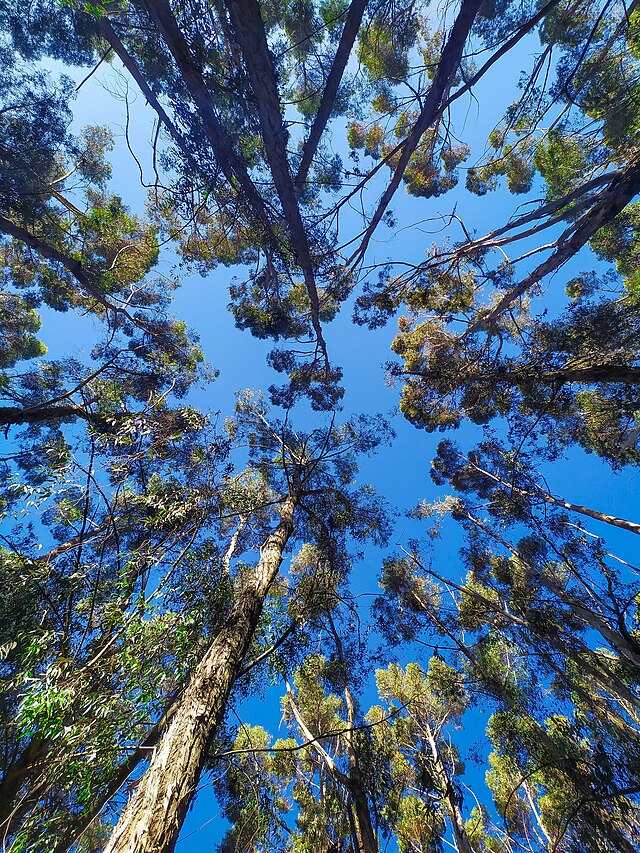
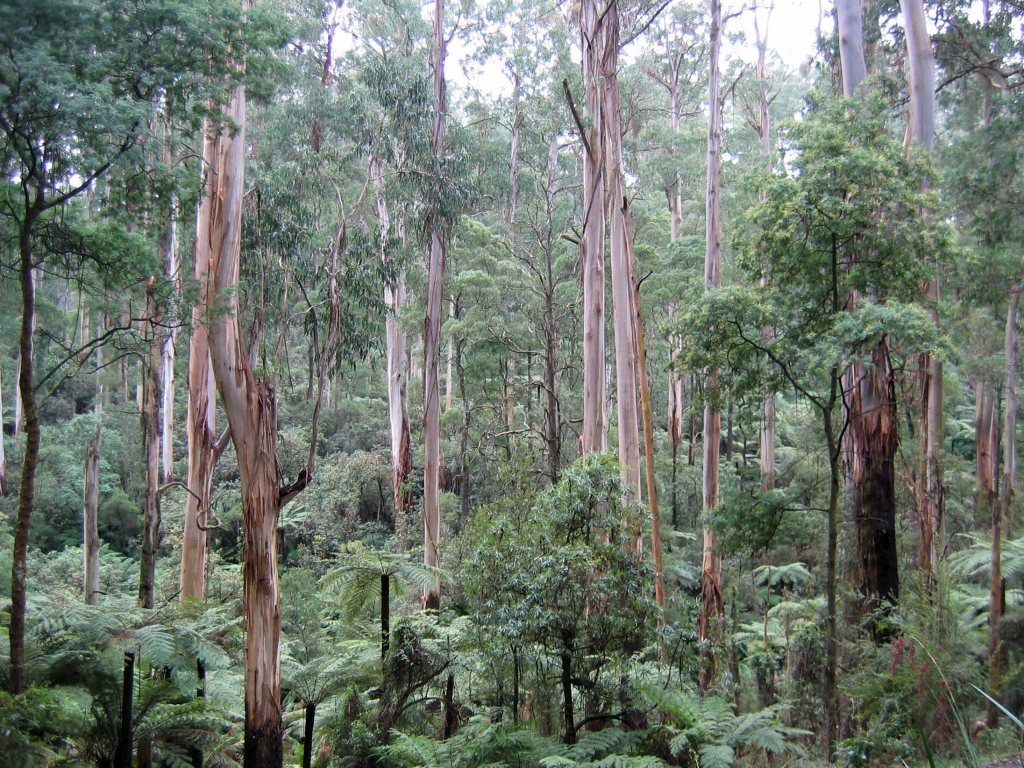
I started with the home of Koralo and Delfen, the two forest guardians in the crew. I imagined a lush woodland, partially inspired by Australia’s eucalypt forests. Inside it was the towering magical city of Taumaturgio.
Then came the mountain stronghold of Zirkono Minado, home to the iconic matriarchal clan of elite warriors known as the Gardistona. The pink-haired figure in my early vision became a captain named Tondra.
Finally, I envisioned a frozen hinterlands where the druid, Glacimonto, hailed from. Mistika formed in my mind first as a land of ice and magic.
When imagining the regions of Ulstra, I first thought about geography and culture. Daily life and professions came later. Zirkono Minado was rigid and structured. Glavo Brilo was a socialist military bastion. In Taumaturgio, the people valued the environment and animals above all. I also knew that I wanted an overarching plant-based philosophy in Ulstra.
Once I started to define these regions, I knew I needed more than mental boundaries. Ulstra could only fully take shape if I created a real map of it.
The first map was a crude drawing. The regions had placeholders for names (Mistika was Jostad, Taumaturgio was Tuxxo, etc.). And the world turned out a lot smaller than I had imagined it. Thankfully, through the use of Inkarnate Pro, I was able to create a map that felt worthy of Ulstra.
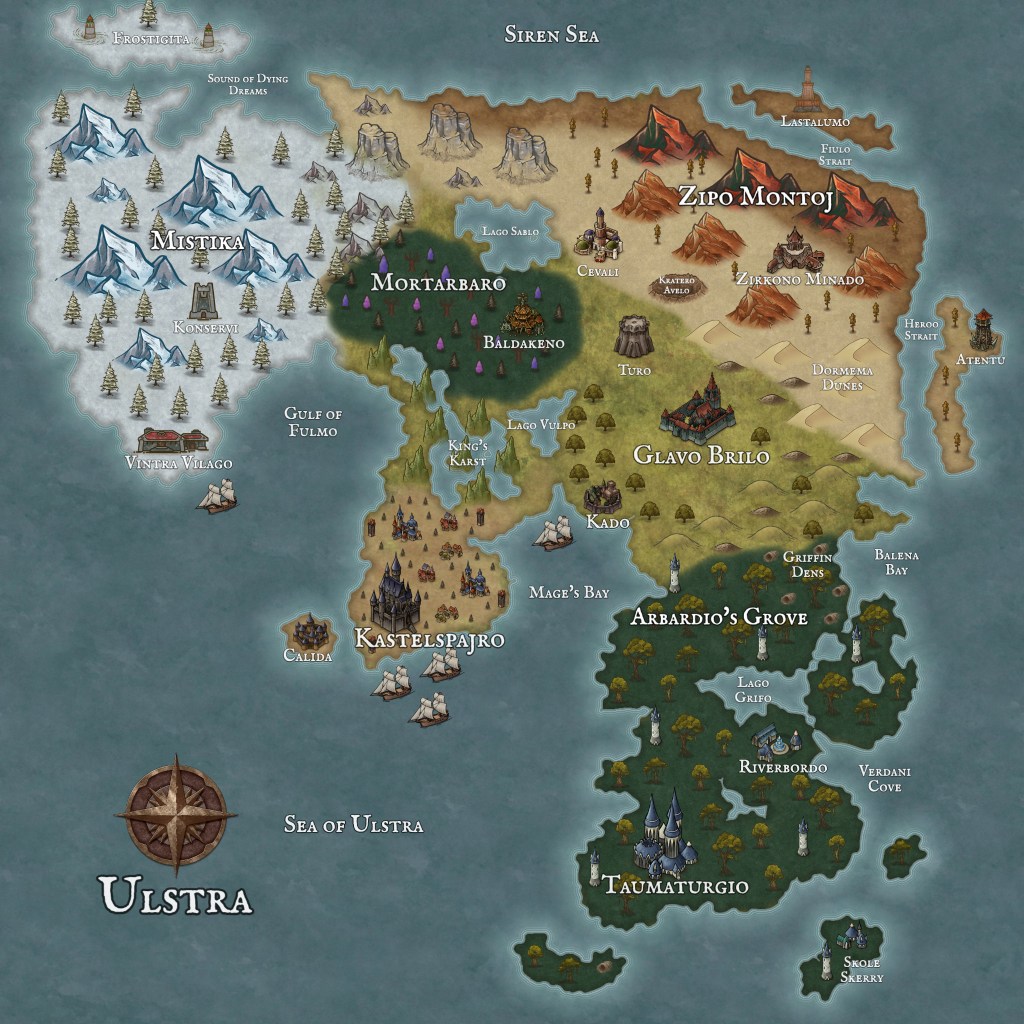
Creating the map made Ulstra feel real. It left the realm of imagination and became something more. Countries have borders, characters have homes, stories have realistic parameters based in a fully realized world.
This philosophy applies to the magic systems I created as well. I wanted Ulstra’s magic to have rules and limitations, just like I wanted the world to have boundaries. My characters became genuine people with realistic constraints, rather than superheroes who existed to serve a fantastic plot.
Through my characters and cultures, I am exploring the concept of power in Ulstra. Some people want it, some don’t, and some end up wielding it whatever their desires or thoughts on the matter. And there is a deeper meditation about when it’s time to cede power to the next generation.
If I had any advice for fellow writers and creators early in the process of building their own worlds, it would be this: Be patient with names. They may not come to you at first, and it’s perfectly fine to use placeholders.
Ursula K. Le Guin talked about how names in fantasy worlds should carry weight, should be thematic, grounded in truth. I cycled through various names before finally deciding on an Esperanto-based language and naming scheme for Ulstra that just felt right for the world I’d created.
About halfway through the first draft, Ulstra started to feel like a real place. By the time I finished that draft, my creation was no longer clay—it was set in stone. That didn’t limit me at all. In fact, it grounded me.
It was a feeling of accomplishment and wonder to see Ulstra stand on its own. It felt like a real place I could journey to, even if only in my mind.
When I finally wrote the scene where Koralo, Delfen, Glacimonto, and Tondra are standing on the cusp of their adventure, I understood where they came from, where they were going, and what to expect on the path.
The best part of creating this world is knowing that readers will soon be invited into it. I’m itching for the day when others can explore Ulstra on their own, can venture to the furthest corners of my imagined continent.
What I hope readers can take away from Ulstra is a sense of hope and the courage to fight for what’s right. That’s what the heart of Ulstra really is. And it’s what makes it a real world—or at least, one that’s worth reading.
Follow me on social media for more thoughts on writing fantasy:
Bluesky | Mastodon | Threads | Instagram


Leave a comment